A Photographer’s Greatest Gift
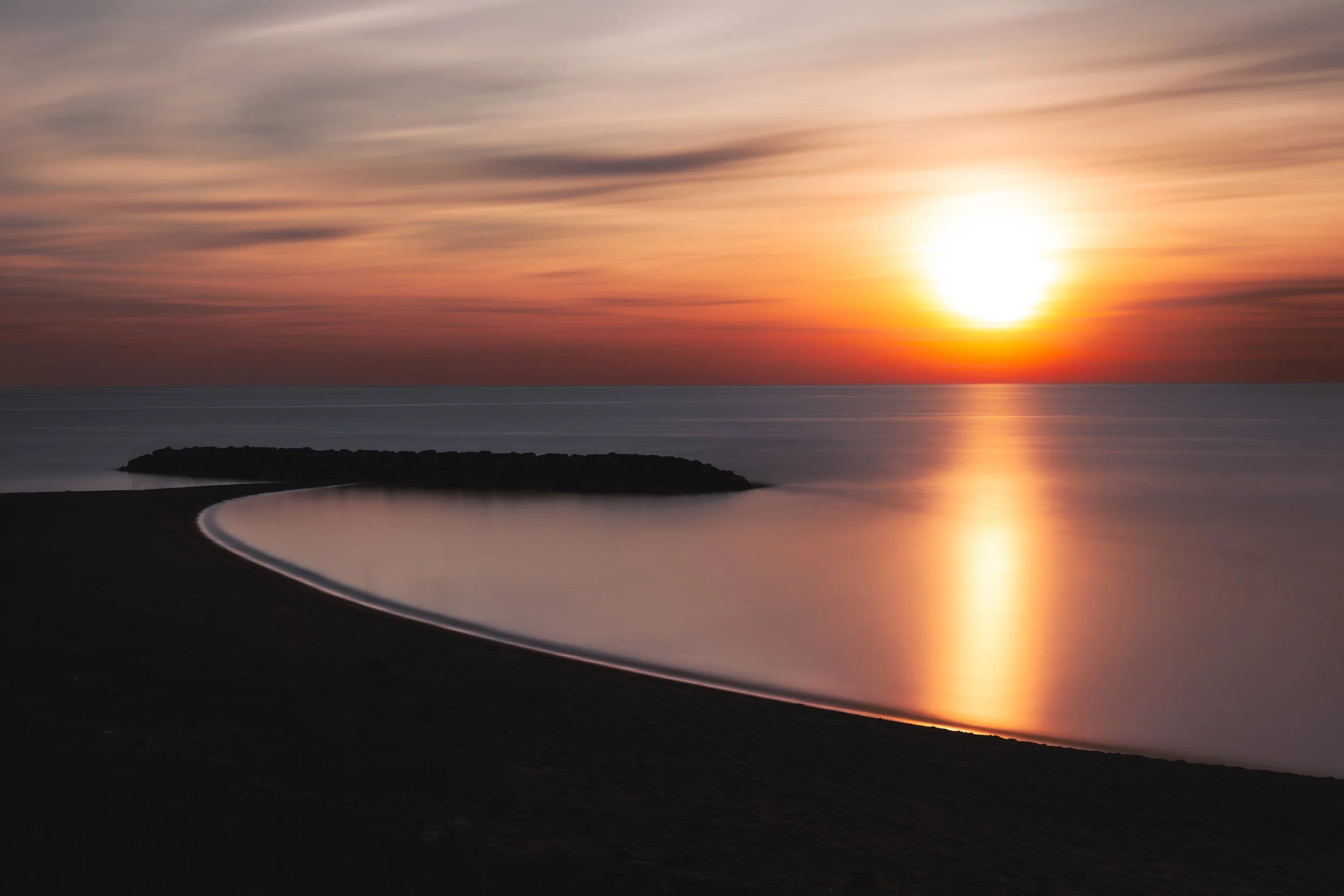
Goddard Beach at Presque Isle State Park, Pennsylvania
Recently, a friend of mine found a book that I, surprisingly, had never heard of. He handed me a copy of a very small book, only 46 very short pages long, that immediately grabbed my attention. “Create Dangerously” by Albert Camus. Despite working in a bookstore and despite Albert Camus being my personal favorite philosopher, I had never heard of this small book which transcribed a speech Albert Camus gave just a few days after winning his Nobel prize in Literature. The stories Camus wrote and the stories people wrote down of his personal life forever changed the course of my life, and I will always give partial credit to these stories for making me the person that I am today. Because of my deep personal connection to Camus, I knew that I simply had to digest every ounce of this otherwise inconspicuous book handed to me. I was obviously excited to read this book like a giddy Marvel Comics fan watching the newest Spiderman movie, however, I can’t say I expected this little book to speak to the artist side of me as much as it did.
With the title given to the book, Create Dangerously, I certainly expected it to be an invitation and a declaration for listeners and readers to express themselves authentically with passion and freedom like you find in the rest of Camus’ works. What I did not expect was to find myself reading out loud Camus at his absolute best. He seamlessly moves between his fiery and passionate voice that inspires a humanism filled with love and connection for the world we live in with the meticulously thought philosophic voice that you find in his philosophical essays like the Myth of Sisyphus. As I finished the speech, many of my thoughts floating around art, my role as an artist in my community, and how I love art began to feel more focused and as part of a much larger story to tell about how to create art, how to view art, and how to love art.
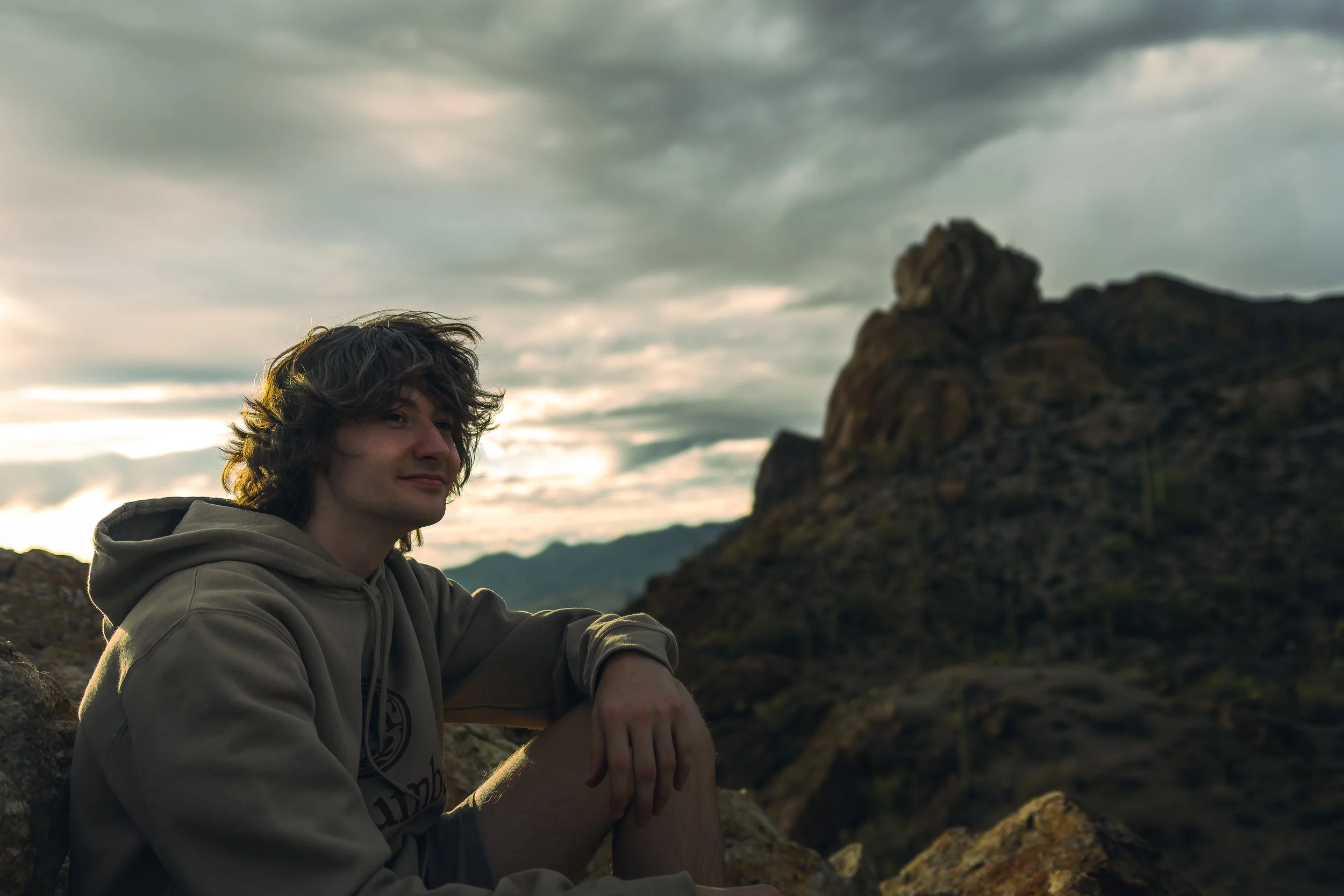
Gates Pass, Tucson Arizona
When I started photography, I never had any expectation that it would envelop almost every aspect of my life. Photography, for me, started as something small, an excuse to do fun things, and have something to remember the fun memories I made. My grandma bought me a Canon T7 along with two kit lenses. I thought my handy little set up that fit in a small bag that I could throw over my shoulder would be the only tool I needed to take the best photos to share with my friends. I realized two things very quickly:
There were many technical aspects to photography that I knew nothing about.
The feeling I got from pulling out my camera anytime I wanted to capture a moment was intoxicating and addictive.
The first photos that I took were of a handful of birds and friends. I still laugh at the anxious thoughts I had when I first started. I was immediately intimidated by a sense of responsibility I had anytime I pointed my camera at people. I always joke that when you take a photo of a person with a professional looking camera, their first reaction is “how do I look?” expecting the best photo ever captured of them. When you are first learning photography, I can promise that your photos will look “technically” worse than a phone photo which does all of the work figuring out how to take a sharp and well exposed photo. By my own admission, I would constantly miss focus on stationary subjects. I would constantly underexpose, overexpose, and make interesting choices with how I balanced my exposure triangle. I would constantly use the wrong focal length for the story that I was trying to tell with my photos. I took a ton of bad photos. I have met a ton of people who would look at photos like these, get discouraged, and stop taking photos all together. In all honesty, I think a younger me would have done that. When I was in elementary school, I remember drawing being something that didn’t come easily to me from the beginning so I stopped altogether. I remember early on making a declaration that I was a STEM kid and not an art kid. How Ironic. I think with the rise of AI, society has become more attuned to understanding you aren’t just born good at things, you actually have to put in the work. That doesn’t stop people from making the occasional comment, “wow, you just have a knack for drawing,” or ‘Beautiful, you have a natural eye for photography.” In reality, artists who spend each day laboring away perfecting their craft and developing their skill know that all skill in art is something born out of practice.
So what kept me from just giving up when I realized buying a nice camera didn’t mean I would immediately be the best photographer in the entire world? When I started photography, I admittedly didn’t have as discerning of an eye that I do now. When I took a photo, I would often be able to see past every imperfection in the photo and see the reason that I took the photo in the first place. When I took photos of friends, I wouldn’t just see that I awkwardly cut off their legs or overexposed their foreheads where the sun was reflecting on their skin. When I took photos of birds, I would largely focus on the memory of what it was like standing and watching them bathing in the marsh at Presque Isle or eating nuts on their perches. I loved my photos and I would happily share them with every person I could. I would pull them up on my computer and show them to my family, I would go through each and every single one of them with my friends, and I would force my coworkers to suffer through the endless images that I would show them. I wouldn’t say I was blind to the imperfections of my work but I think I was so enveloped by the love of what I was sharing that I would happily look past those imperfections to show people what I loved. I really just wanted to take photos of things I loved and by taking photos of things I loved, I learned more about those things. I felt motivated to keep taking photos because I was filled with bliss while I was taking and sharing my photos. Thanks to my internal motivation to continue, I began finding online tutorials teaching the technical aspects of photography so I wasn’t left guessing what my exposure settings would be when I took my photos and once I started taking RAW photos and began processing them myself, I knew how to process them to my taste. Every ounce of free time that I had would be spent learning the technical language of cameras. Even today, I do take pride in myself today for my technical knowledge about all things photo related because of the time I spent learning the details early on. I will say that this isn’t what makes my photos unique. What makes my photos my own is my unique perspective on the world, my relationship with myself and the world around me, how I love, what I love, and where I find that love.
When people are typically learning photography, it makes sense why people spend so much time bogged down in the questions of nailing sharpness, exposure, focus, and the technical aspects of a photo, but when viewing something as art, we spend almost the smallest amount of time with those details. When you look at Patricia Seaton Homonylo’s photo that won her Wildlife Photographer of the Year, “When Worlds Collide,” you don’t ask what camera was the photo taken with, you don’t ask about the lens, the shutter speed, aperture, the iso, white balance, or anything like that. You look at the image and are struck by the image of dead birds placed in a circle, you see birds of all sizes with the largest in the center and with the smaller birds forming a ring around them. There is a terrible feeling of morbid curiosity of what happened to these birds? And then you learn the story of the image and it is haunting, it shows the sheer scale of the tragedy that these birds in Toronto face because of human encroachment. Its an image that you won’t forget. You might be wondering why I seemed to jump from talking about how Love guides most of my creation to something so sad. While it is true, there isn’t a lot of good feelings to be found within her image, it is true that the reason for the photo and the goal of the photo came from a place of love.
What I have learned most through photography, taking photos, processing photos, and sharing those photos is emotional wisdom. In life, you will experience life, process your experiences, and then share your unique self with the world. Each step within the photographic process is beautifully mirrored with every other aspect of life. As you grow as a person, you will grow as a photographer. One meditative practice that helped and continues to help me is start by identifying the key elements of the photo, identify what I like, don’t like, and am unsure about, what I would love more of, what I would want less of, and how I’d maybe retake the photo if I was given the opportunity. Clearly articulate your feelings for each and every photo. There are many photos that I have taken that I initially knew I liked and photos that I had taken that I initially knew that I didn’t like. These gut feelings must be explored if you to learn how to replicate those same gut feelings in more photos. Where is your eye guided throughout the photo? What feelings do the core elements of the photos express when you see them? When you take a photo, you should know why you’re taking the photo. Who are you sharing the photo with, who do you expect to see the photo? How will the people who see the photo react? Will they be guided to the parts of the image that you want them to see and latch onto? When you do share your photos with people, how do you share these photos? What do you hear from the people who see them? What don’t you hear? Every step in the process gives you a million unique questions to ask yourself and you get better at asking yourself those questions and you get better at providing answers for those questions when you do ask and answer those questions.
Camus wrote, “The freedom of art is not worth much when the only purpose is to assure the artist’s comfort.” I echo what he said because art is driven often driven largely by what is beautiful, however, artists need to remember that what is beautiful is in a relationship with the good and the true. There are times I, as an artist, am confronted with the harsh realities of the world. The beauty of a heron’s slow and methodical stalking of the marshes or an osprey’s heroic crash from the sky into a lake is contrasted by the sad reality of the fate of their prey. As an artist, do I show this reality? How much do I show? When I am taking a video, do I cut right after the fish is caught or do I show you as the heron thrashes the fish around and swallows it whole all while the fish is still reflexively twitching in the gullet of the bird? Perhaps the important thing isn’t what we do show and don’t show but why we do or don’t show it. As artists, we have the freedom of showing what is important to us, however, that presents us with the most important challenges of creating art. What is good, what is true, and what is beautiful about what I am choosing to share? Will the person that I am sharing my art with, see what I find good, true, and beautiful about this artwork? How might my art be seen amongst different audiences and will it produce the effect that I hope to see in those audiences? The challenge of any artist is understanding the relationship that their art will take with those who see their artwork. Your art is your attempt to reach out to someone and move them.
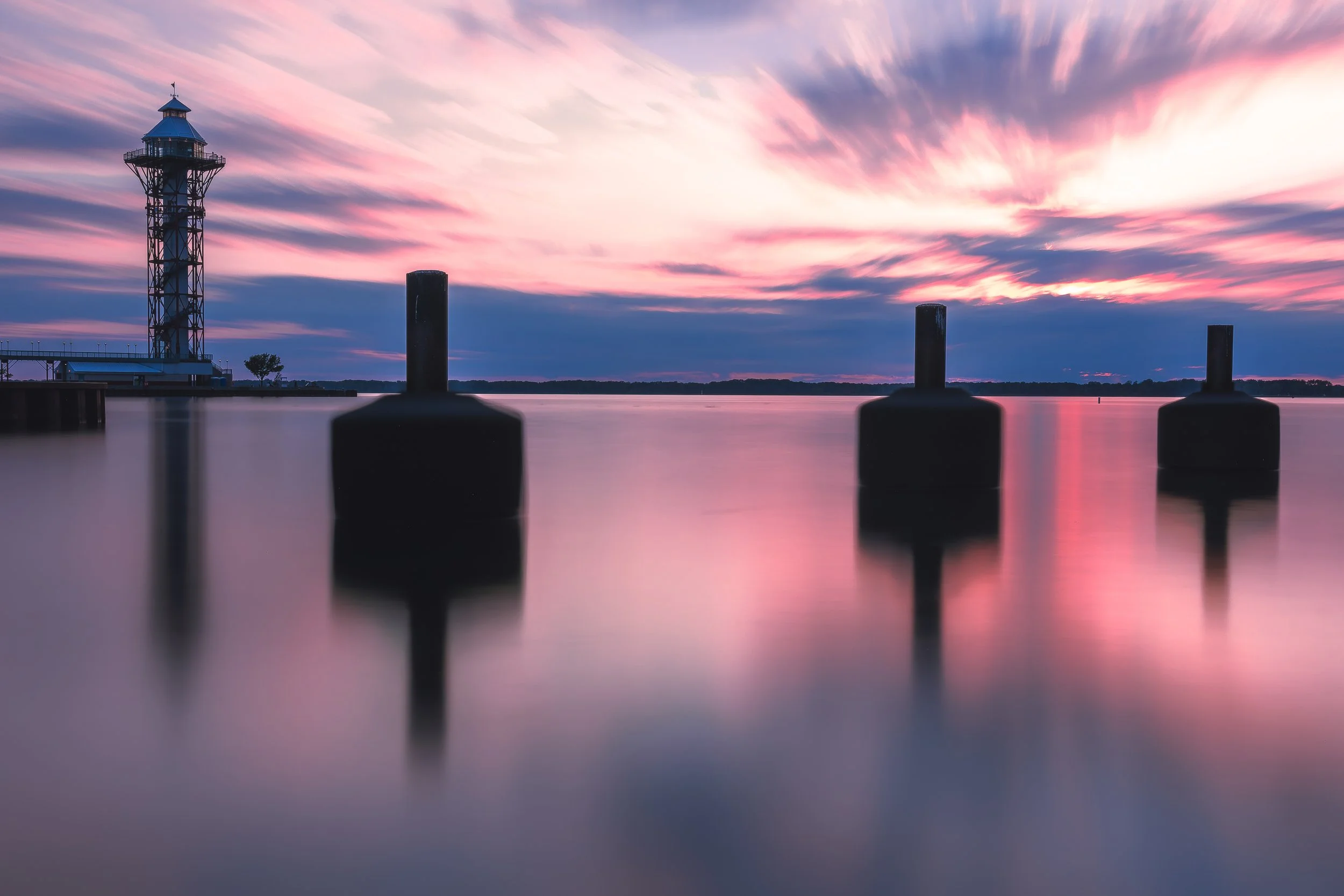
The Bicentennial Tower, Erie’s most identifiable landmark building
The power of a human first approach to your art, an approach to art that focuses on the internal lives of the future viewers of your art, is that it will be made to meet people where they are at rather than force the alien upon them and get expectedly rejected wrongly. You will find there are no absolute answers to the questions that you will confront. Your answers will be relative to your life. What resonates for you may or may not resonate with others and that comes entirely from the diversity of life found within others. It would be strange to ask, “is mustard on a sandwich correct?'“ It makes far more sense to ask someone, '“would you like mustard on your sandwich?”(I personally despise mustard on my sandwiches, but I love honey mustard on a pretzel.) Just as chefs don’t make food for the sake of food, neither do artists make art for the sake of art. Chefs make food for the taster, artists make art for the viewer. And just as a chef is bound to make food with the ingredients available to him, an artist is bound by the experiences from the many walks of life that they have had the pleasure of traveling down.
Photography presents a unique opportunity, to say “I was here.” A photographer’s presence where they are their unique understanding of the world around them. A photo is proof, “I was there.” Ansel Adams unique understanding of the places he walked have completely shaped how the world views the American West. The places where Ansel Adams stood are now places where admirers dream to travel. His vision, his relationship with the landscape, and what he found beautiful sits in the mind of countless photographers and park visitors today. Manhattanhenge is now a photo opportunity that completely halts traffic in New York traffic because of the sheer number of people trying to copy the iconic photo with the sun perfectly framed by the buildings of the towering skyscrapers of New York. My first ever moment where I felt truly seen by my larger community was with my photo of a chipmunk filling its cheeks from a pile of nuts many times larger than itself. This photo won the 2024 Penn State Fall Photo Contest and put my work in front of the much larger Penn State community. For a while when I met people at Penn State, I would talk about my photography and everyone immediately would know about my photo without even knowing my face. I’d get so many questions about how the photo came to be and it was so wonderful to feel seen by my community. It all culminated in a news article placing me on the front of Penn State Social Media. My entire relationship with my community was completely shaped by my gift of sharing my art with my community.
In more recent times, I’ve had to laugh because I keep getting recognized by people out in public. Naturally, I am really bad with names and faces, I have a bit of face blindness so I am frequently confronted with someone calling me over like “hey you take photos of birds!” I’ve found myself in so many wonderful unexpected conversations with so many wonderful unexpected people in very unexpected places. Coffee shops, restaurants, the gym, the park, and even local festivals! I love talking with people about their favorite birds, their fun experiences with photography, and whatever has captured their attention through my photos! It’s not hard to see the best of people when they express their interest in something they found beautiful and hearing their perspective on what they find beautiful usually gives me an even more unique perspective of the world filled more fully with beauty and love. And I can take what I have learned from these conversations, go out capture that beauty that someone else made me focus on, and share that beauty with others. In many ways your art can be a conduit to bring people together unintentionally. My favorite has been seeing those around me where I work, my coworkers and even my average customer, slowly finding themselves more and more interested in birds and the outdoors than when I first started capturing what I saw out in nature. I have seen my entire workplace, Pressed Book and Coffee, redecorate the store to have an entire section just for the sheer interest in nature books. And in the month of July, we added Piping Plover themed drinks to the menu, advertised Piping Plover Fest, share pamphlets from the Purple Martin Conservation Association, and had an entire bird themed display! Its felt like my passion has slowly spread and brought my community together for a good cause, raising awareness for conservation efforts of the Piping Plover, a bird that I have yet to take a photo of that I am proud of!
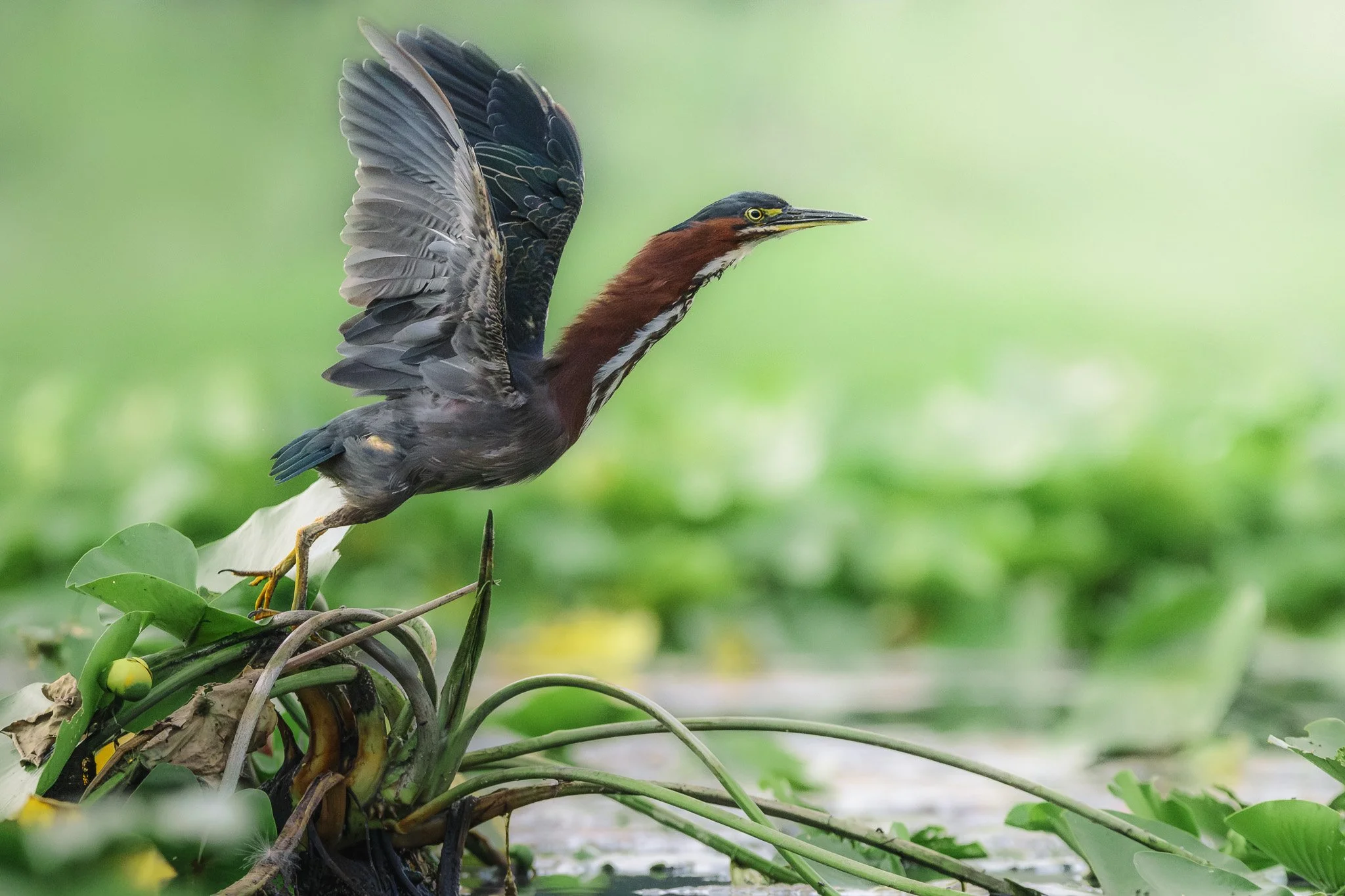
Green Heron taking flight
AI “art” has absolutely exploded the attention people have to this conversation about '“what is art? What is its role in society? Why should we care?” One thing that I have learned from the process of creating art is how creating art gives us a lens(pun intended) to enjoy art at a deeper level. If you look at the first image in the photoblog, you may not realize that I spent about two hours combing the beach trying to figure out how to capture the landscape. From the get-go, I knew I wanted a good sunset beach photo that utilized the iconic rock walls that dot the shores. My first instinct was to get low to distract from the otherwise chaotic beach sand. I immediately realized that I lost the beautiful line of sand that lead to the rock wall. I knew I had to rethink my typical approach to taking a photo to really capture this aspect of the beach that I found beautiful. I tried from various heights and angles. Sometimes the leading line of sand started too high up making the weight of the sand feel too heavy in the frame and unbalanced for what I was trying to capture. Other times the wall of rocks was too front and center making the photo feel like it was just about the rocks, not about the beach, the water, the sky, the entire landscape as a whole. Every photo revealed something specific about what it was that I loved about the scene when I first showed up to the beach. My photo slowly became a culmination of every aspect of the beach that I learned to love in just the right way.
The problem with AI “art’ is that there is none of that. There is no introspection on what we love, what distracts us, what brings us into a photo, what takes us out of a photo, and what makes the photo a culmination of learned experience. I know a photo is special when I know exactly what the person taking the photo was really focused on. In a scene full of distraction, they were able to cut through those distraction surgically. My favorite photo I have seen recently was by a photographer Kyle Doerksen. The photo captured a bittern walking along a wall of mangrove roots above water. I have personally never had the opportunity to photograph or even see a bittern but I have read enough and seen enough on them to instantly recognize the bird. I have spent much time photographing other species of herons like the green heron above, so I was aware of many of the struggles photographing a species like that in an environment like that. Roots are chaotic and many lines of them can be very overpowering in a photo especially when your subject is already small in the frame. Kyle was able to focus the light in the frame to contrast the heron enough with its background the really draw your eye right to the bird but not so much that you lose this environment that partially gives the bittern its identity. There is a subtlety to Kyle’s photo that takes away everything that you don’t need and leaves everything to love right there for the eye to take in. I know exactly what Kyle loves about the bird, loves about the bird’s relationship with its environment, I know exactly how much effort Kyle has spent trying to express that love in the form of art. The photo is simply astounding.
Photos like Kyle’s bittern and photos like my sunset are not made through a comfortable process of prompting what we want. It’s a slow process that forces us to be uncomfortable. Camus second to last paragraph in his speech talks about this brutal process of discovery that leads to creating works with impact.
“It is said that Nietzsche after the break with Lou Salome, in a period of complete solitude, crushed and uplifted at the same time by the perspective of the huge work he had to carry on without any help, used to walk at night on the mountains overlooking the gulf of Genoa and light great bonfires of leaves and branches which he would watch as they burned. I have often dreamed of those fires and have occasionally imagined certain men and certain works in front of those fires, as a way of testing men and works. Well, our era is one of those fires whose unbearable heat will doubtless reduce many a work to ashes! But as for those which remain, their metal will be intact, and, looking at them, we shall be able to indulge without restraint in the supreme joy of the intelligence which we call “admiration.”
- Camus, Create Dangerously
Creating art is a trial by fire and when an artist throws themselves within this baptism of fire, the artist is reborn. The artists’ life is exposed through their ability to articulate their heart. The gift of art is the product of the artist’s wisdom with the greatest works of arts have the ability to etch the light and warmth of the good, the true, and the beautiful of the artists’ life onto another’s heart. Whether its a painting, a book, a photo, a dance, a poem, a movie, or any other form of art, I know the art that I feel my heart pulled to most are the ones that poured the life of another into my life. A photographer’s greatest gift, an artist’s greatest gift, is the gift to draw out love, draw out beauty, draw out truth, impart wisdom, and to build bridges of this light connecting the hearts of others. My journey with photography has shaped who I am through how I love. How I love is to act, to create art. And by creating art, I connect myself to the greatest things in the world that I have the gift of being able to share. Its a journey that has hurt, a journey that has caused me pain, and a journey that has broken me in many ways, but its a journey that has allowed me to heal, a journey that has allowed me to feel bliss, and a journey that has built me into who I am.